


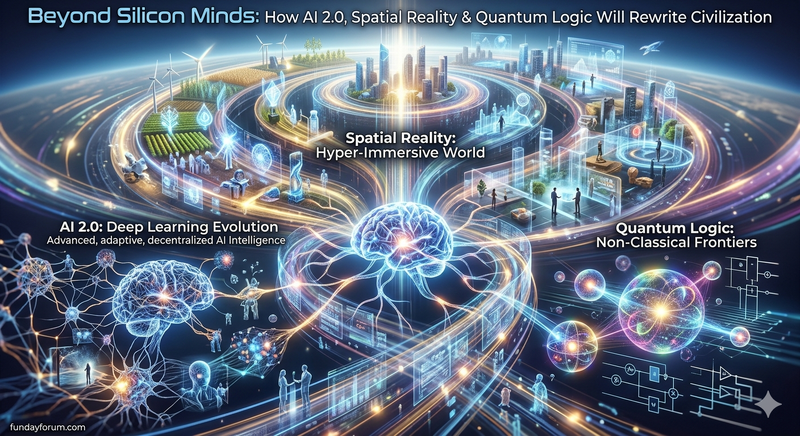
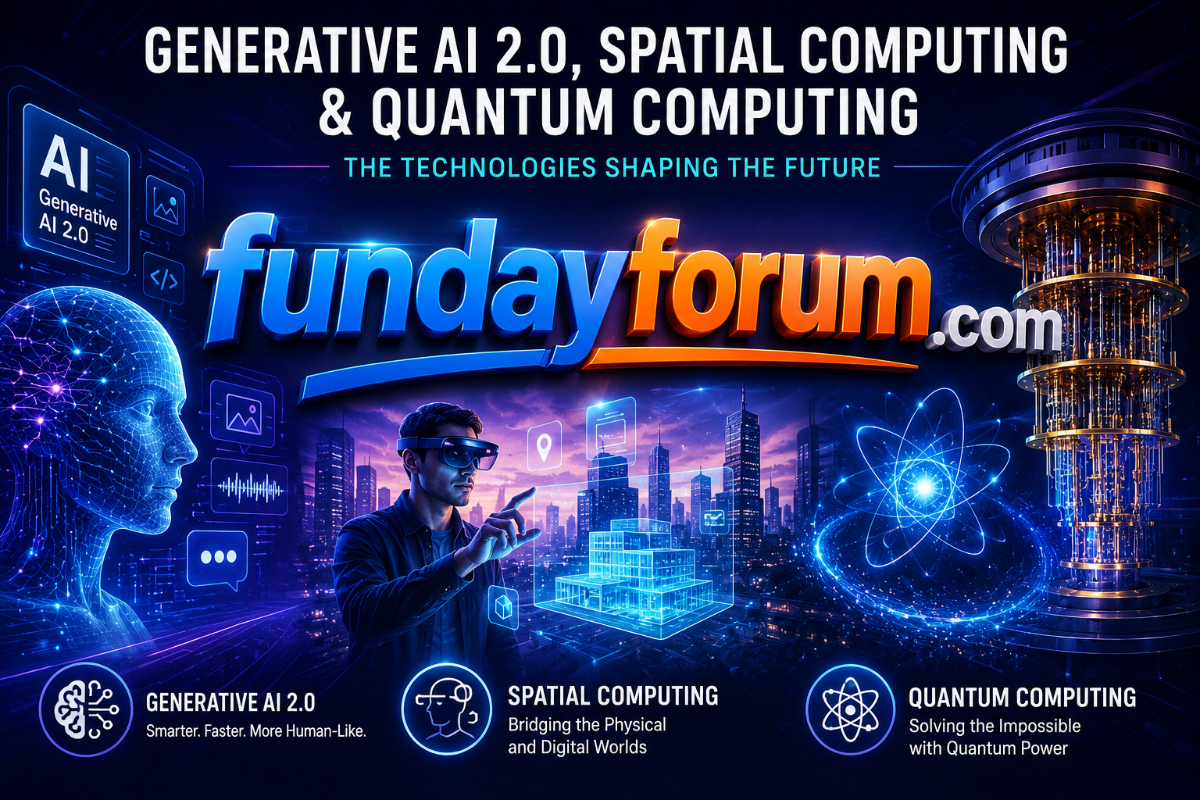
Generative AI 2.0, Spatial Computing & Quantum Computing – The Technologies Shaping the Future
Introduction
The world is entering a new technological revolution driven by three groundbreaking innovations: Generative AI 2.0, Spatial Computing (Augmented Reality & Mixed Reality), and Quantum Computing. These technologies are transforming industries, changing how humans interact with machines, and redefining the future of business, healthcare, education, entertainment, and scientific discovery.
From AI systems capable of reasoning like humans to digital environments blending with the real world, and quantum machines solving problems impossible for traditional computers, the future is arriving faster than expected.
1. Generative AI 2.0 – The Next Evolution of Artificial Intelligence
What is Generative AI 2.0?
Generative AI 2.0 is the advanced stage of artificial intelligence that goes beyond simple content generation. Unlike early AI models that mainly created text or images, modern AI systems can now:
-
Understand complex human instructions
-
Reason and make decisions
-
Generate videos, music, code, and 3D designs
-
Act as intelligent assistants
-
Learn from multimodal data (text, voice, image, video)
-
Automate business operations
This new generation of AI is becoming more human-like, context-aware, and capable of performing tasks traditionally handled by professionals.
Key Features
Multimodal Intelligence
AI can process multiple formats together:
-
Text
-
Images
-
Audio
-
Video
-
Documents
-
Real-time voice conversations
AI Agents
Modern AI systems can:
-
Book appointments
-
Analyze data
-
Write software code
-
Manage workflows
-
Conduct research automatically
Personalized Experiences
AI can create highly customized:
-
Education systems
-
Marketing campaigns
-
Entertainment content
-
Shopping experiences
Industries Being Transformed
Healthcare
-
AI-assisted diagnostics
-
Drug discovery
-
Personalized treatment plans
-
Medical imaging analysis
Education
-
AI tutors
-
Smart learning systems
-
Personalized courses
-
Instant language translation
Business & Marketing
-
Automated customer support
-
AI-generated advertisements
-
Content creation
-
Data-driven business strategies
Entertainment
-
AI-generated movies and music
-
Virtual influencers
-
Realistic gaming characters
-
Interactive storytelling
Benefits
-
Increased productivity
-
Faster innovation
-
Reduced operational costs
-
Better customer experiences
-
Enhanced creativity
Challenges
-
Ethical concerns
-
AI-generated misinformation
-
Job displacement fears
-
Privacy issues
-
Dependence on AI systems
2. Spatial Computing – Blending Digital and Physical Worlds
What is Spatial Computing?
Spatial computing refers to technologies that merge the digital world with physical reality. It includes:
-
Augmented Reality (AR)
-
Virtual Reality (VR)
-
Mixed Reality (MR)
-
Smart wearable devices
These systems allow users to interact with digital objects as if they exist in the real world.
How Spatial Computing Works
Spatial computing uses:
-
Sensors
-
Cameras
-
AI
-
3D mapping
-
Computer vision
-
Motion tracking
This creates immersive environments where digital content responds to human movement and surroundings.
Real-World Applications
Education
Students can:
-
Explore virtual laboratories
-
Study 3D anatomy models
-
Experience historical events interactively
Healthcare
Doctors use AR for:
-
Surgical assistance
-
Medical training
-
Patient visualization
Gaming & Entertainment
-
Immersive virtual worlds
-
Interactive gaming experiences
-
Live holographic events
Retail & Shopping
Customers can:
-
Try products virtually
-
View furniture in their homes
-
Experience virtual showrooms
Architecture & Engineering
-
3D building visualization
-
Digital twins
-
Real-time collaboration
Future of Spatial Computing
Experts believe spatial computing could replace smartphones in the future through:
-
AR glasses
-
Wearable holographic displays
-
Gesture-based computing
Companies are investing billions into creating the next generation of immersive technology ecosystems.
Advantages
-
Enhanced learning experiences
-
Improved collaboration
-
Better visualization
-
Increased engagement
-
Faster training processes
Challenges
-
Expensive hardware
-
Privacy concerns
-
Motion sickness issues
-
Limited battery life
-
High development costs
3. Quantum Computing – The Power Beyond Traditional Computers
What is Quantum Computing?
Quantum computing is a revolutionary computing technology based on quantum mechanics. Unlike classical computers that use binary bits (0 or 1), quantum computers use qubits, which can exist in multiple states simultaneously.
This allows quantum computers to solve extremely complex problems much faster than traditional systems.
Core Concepts
Superposition
A qubit can represent:
-
0
-
1
-
Both at the same time
Entanglement
Qubits can become interconnected, allowing information to be processed instantly across systems.
Quantum Parallelism
Quantum systems can process many calculations simultaneously.
Applications of Quantum Computing
Medicine
-
Drug discovery
-
Protein simulation
-
Genetic analysis
Cybersecurity
-
Advanced encryption
-
Quantum-safe security systems
Finance
-
Risk analysis
-
Fraud detection
-
Portfolio optimization
Climate Science
-
Weather prediction
-
Environmental modeling
-
Energy optimization
Artificial Intelligence
Quantum computing may significantly accelerate AI training and machine learning.
Why Quantum Computing Matters
Some problems take classical computers thousands of years to solve. Quantum systems could potentially solve them in minutes or hours.
This could revolutionize:
-
Scientific research
-
Space exploration
-
Material science
-
National security
-
Artificial intelligence
Current Limitations
Quantum computing still faces challenges:
-
Extremely expensive systems
-
Error correction difficulties
-
Complex infrastructure
-
Limited scalability
-
Cooling requirements near absolute zero
The Convergence of These Technologies
The real revolution will happen when:
-
Generative AI
-
Spatial computing
-
Quantum computing
combine together.
Imagine:
-
AI-powered virtual worlds
-
Quantum-enhanced AI models
-
Real-time holographic assistants
-
Fully immersive digital workplaces
-
Advanced medical simulations
-
Smart cities powered by AI and quantum optimization
These technologies together could reshape civilization over the next decade.
Impact on Jobs and Society
New Career Opportunities
Future careers may include:
-
AI engineers
-
Prompt designers
-
Quantum programmers
-
AR/VR developers
-
Metaverse architects
-
Digital twin specialists
Skills Needed for the Future
People should focus on:
-
AI literacy
-
Coding
-
Data science
-
Creative problem-solving
-
Cybersecurity
-
Digital communication
Ethical Responsibilities
Governments and companies must ensure:
-
Responsible AI use
-
Data privacy protection
-
Fair access to technology
-
Prevention of misuse
Conclusion
Generative AI 2.0, spatial computing, and quantum computing are not just trends — they are the foundation of the next digital era. These technologies will transform how humans learn, work, communicate, shop, and interact with the world.
While challenges exist, the opportunities are enormous. Businesses, students, developers, and governments that adapt early will gain significant advantages in the future technology landscape.
The coming decade may become one of the most important periods in technological history, where intelligent machines, immersive digital realities, and quantum-powered systems reshape human civilization forever.
SEO Keywords
Generative AI 2.0, Spatial Computing, Quantum Computing, Artificial Intelligence Future, Augmented Reality Technology, Mixed Reality, Future Technologies 2026, AI Revolution, Quantum AI, AR and VR Technology, Emerging Technologies, Future of Computing, Tech Innovations, AI and Quantum Computing, Digital Future
Meta Description
Explore how Generative AI 2.0, Spatial Computing, and Quantum Computing are transforming industries, businesses, healthcare, education, and the future of technology worldwide.













![More information about "[Dark / Light] Fluent Design Theme Edition"](https://fundayforum.com/uploads/monthly_2022_10/1.thumb.png.2ade2c3bae599c8d90ce20980a1e1307.png)

























Recommended Comments
There are no comments to display.
Join the conversation
You can post now and register later. If you have an account, sign in now to post with your account.
Note: Your post will require moderator approval before it will be visible.