


Faheem Akram Arrested in Pakistan Over $126 Million US Postage Fraud Case
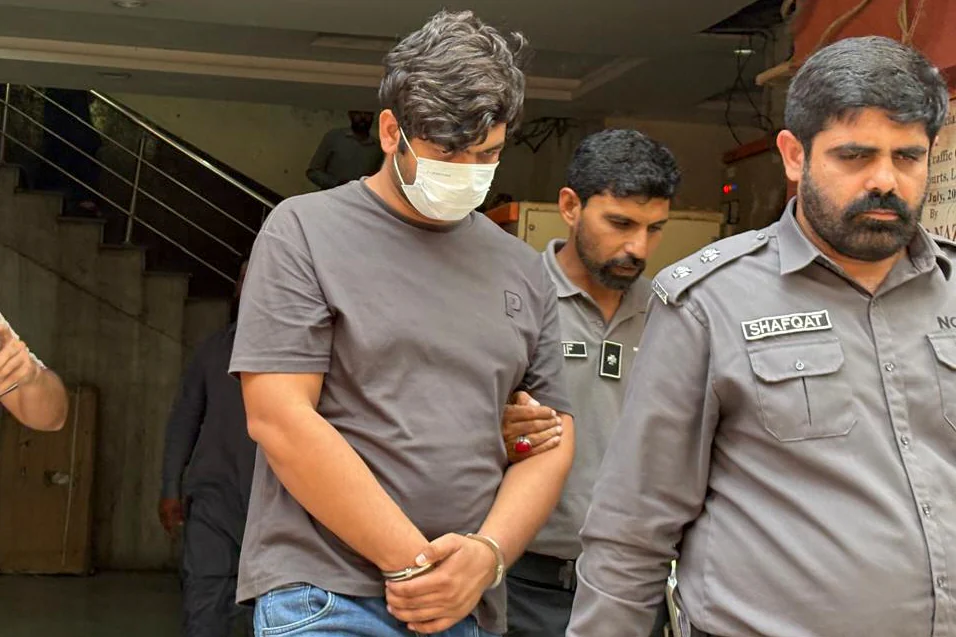
Lahore, Pakistan: A major international cybercrime investigation has taken a significant turn after Pakistan’s National Cyber Crime Investigation Agency (NCCIA) arrested Faheem Akram, a 33-year-old man accused by US authorities of operating an online counterfeit postage-label business that allegedly caused more than $126 million in losses to the United States Postal Service (USPS).
The arrest, reported on October 20, 2026, followed an extensive investigation involving raids, digital tracking and efforts to trace financial transactions. The case has attracted international attention because of the alleged scale of the operation and a reward of up to $100,000 previously announced by US authorities for information leading to the suspect’s arrest and conviction.
According to investigators, the case centres on an unauthorised website allegedly used to sell millions of counterfeit US postage labels.
Why Was Faheem Akram Wanted in the United States?
The US Postal Inspection Service placed Faheem Akram on its wanted list in connection with the alleged sale of counterfeit postage labels through a website called LabelsBank.com.
According to the US indictment, the website allegedly sold more than 5.1 million counterfeit postage labels to over 5,200 customers. Prosecutors allege that the operation caused losses exceeding $126 million to the US Postal Service.
The alleged scheme involved offering postage labels at prices far below legitimate postal rates. US authorities say the labels were sold for approximately $2 each, regardless of a package’s weight, size or destination.
These allegations form the basis of a serious federal case in the United States. However, the charges remain allegations, and the suspect’s guilt must be determined through the legal process.
$100,000 Reward Announced by US Authorities
The case gained further attention when the US Postal Inspection Service announced a reward of up to $100,000 for information leading to Faheem Akram’s arrest and conviction.
The reward highlighted the seriousness with which US authorities were pursuing the alleged counterfeit-postage operation.
The announcement also brought attention to the wider problem of online fraud, in which digital platforms can allegedly be used to distribute fraudulent products to customers across international borders.
The reward was an incentive for information; it should not be confused with the alleged financial losses or the money earned from the website.
How Did the NCCIA Catch Him in Pakistan?
According to Pakistani media reports quoting NCCIA officials, investigators conducted a weeks-long search operation before arresting the suspect in Lahore.
The investigation reportedly involved coordinated raids at multiple locations, digital and forensic analysis, call-data records, mobile-device tracking and examination of surveillance footage.
NCCIA officials said special teams were formed to trace the suspect and investigate the alleged network. Reports also stated that investigators carried out raids at 35 locations and questioned 47 people during the wider investigation.
Authorities reportedly analysed 122 call-data records, 50 IMEI-tracking reports and recordings from 120 cameras to help establish the suspect’s movements and identify possible links to the operation.
The investigation demonstrates how digital evidence, financial records and coordinated law-enforcement efforts can play an important role in complex cybercrime cases
How the NCCIA Tracked Down and Arrested Faheem Akram: Inside the 10-Day Operation
The arrest of Faheem Akram in Lahore was reportedly the result of a coordinated investigation that combined international information-sharing, digital forensics, financial tracking and surveillance.
According to reports quoting officials from Pakistan’s National Cyber Crime Investigation Agency (NCCIA), investigators spent days trying to establish the suspect’s whereabouts before finally arresting him. The operation extended across several regions of Pakistan and involved multiple investigation teams.
Here is a closer look at how the operation reportedly unfolded.
1. Information From the US Investigation Helped Trigger the Probe
The case began attracting international attention after US authorities pursued allegations that a website called LabelsBank.com had been used to sell counterfeit postage labels.
According to Pakistani media reports, information traced by the US Federal Bureau of Investigation (FBI) was shared with Pakistani authorities, helping the NCCIA investigate the suspect’s alleged activities in Pakistan.
US authorities had already indicted Akram in connection with the alleged scheme. The US Postal Inspection Service also announced a reward of up to $100,000 for information leading to his arrest and conviction.
The information-sharing reportedly helped investigators identify the person they needed to locate and investigate. However, officials have not publicly disclosed every detail of the intelligence exchange or the precise lead that first established his location.
2. Eight Special Teams Were Formed
As the investigation developed, the NCCIA reportedly formed eight special teams under the supervision of Lahore Zone Additional Director Atif Ameer.
The teams worked across Punjab, Islamabad and Sindh to investigate the alleged operation, trace the suspect and examine possible connections with other individuals.
Investigators reportedly conducted raids at 35 locations and questioned 47 people during the wider operation.
These activities were part of the effort to build a clearer picture of the suspected network and determine where the alleged online business’s activities, financial transactions and personal connections intersected.
The reports do not establish that every person questioned was suspected of committing a crime.
3. Investigators Analysed 122 Call-Data Records
One of the most significant details disclosed by the NCCIA was the analysis of 122 call-data records.
Call-detail records can help investigators examine communication patterns, including the timing and frequency of calls and the connections between phone numbers. When lawfully obtained and combined with other evidence, such records can help investigators test timelines and identify potential leads.
In this case, officials reportedly used the records as part of the broader effort to establish the suspect’s movements and trace his activities.
However, the NCCIA has not publicly explained which specific call record led investigators to Akram or whether a particular phone call directly triggered the arrest.
4. Fifty IMEI-Tracking Reports Were Examined
Investigators also reportedly analysed 50 IMEI-tracking reports.
An IMEI is a unique identifier associated with a mobile device. Depending on the available records and network information, device-related data can help investigators connect a handset with other evidence and examine its activity over time.
In a complex investigation, this information can be useful when a suspect’s location is uncertain or when investigators are attempting to verify whether different records relate to the same device.
The reported analysis formed part of the NCCIA’s digital investigation. Officials have not disclosed the exact technical method used to locate Akram or the particular device information that proved decisive.
5. Footage From 120 Cameras Was Reviewed
The investigation reportedly included audio and video recordings collected from 120 cameras.
Surveillance footage can help investigators reconstruct movements, compare events against a timeline and corroborate information obtained from other sources.
Combined with phone records and device-tracking reports, camera footage may help narrow the search area and test whether a suspected location or movement is consistent with the evidence.
According to officials quoted in the media, investigators also used artificial intelligence and other modern technological tools during the operation.
Authorities have not publicly identified a specific camera recording as the breakthrough that led directly to the arrest.
6. A Ten-Day Locator Operation Narrowed the Search
The NCCIA reportedly carried out a special locator operation lasting 10 days before Akram was arrested in Lahore.
During this period, investigators worked to establish his whereabouts and trace his activities. The operation drew on the wider investigation, including digital records, surveillance material, questioning and raids.
Rather than relying on a single piece of information, the reported approach involved examining different sources of evidence to develop a more complete picture.
The precise day-by-day timeline has not been made public. It would therefore be inaccurate to claim that investigators caught him at a particular location because of one phone call, one bank transfer or one camera recording.
What is known from the published accounts is that the operation culminated in his arrest in Lahore in October 2026.
7. The Financial Trail Revealed 16 Bank Accounts
While tracing the suspect, investigators reportedly identified 16 bank accounts allegedly connected to the business.
According to NCCIA officials, the accounts were distributed as follows:
-
Seven accounts reportedly belonged to Faheem Akram.
-
Five reportedly belonged to his brother.
-
Two reportedly belonged to his wife.
-
One reportedly belonged to his sister.
-
One reportedly belonged to his maternal aunt.
Investigators are examining the transactions to establish how money allegedly generated through the website was received, transferred and distributed.
This financial investigation is important because online fraud cases can involve several payment channels and accounts. Following the money may help establish the scale of the alleged activity and determine whether other people knowingly participated.
However, the presence of a person’s bank account in an investigation does not automatically establish criminal responsibility. The role and knowledge of each individual must be assessed on the evidence.
8. How the Website Allegedly Generated the Money
According to the US indictment and reports from Pakistani authorities, LabelsBank.com allegedly operated from August 2023 until September 2026.
The website reportedly sold more than five million counterfeit US postage labels at approximately $2 each. US prosecutors allege that the labels were sold to thousands of customers and that the scheme caused more than $126 million in losses to the United States Postal Service.
The alleged method involved offering labels at a fixed, unusually low price regardless of a parcel’s size, weight or destination.
The investigation is examining the website’s operations and the financial transactions associated with the alleged sales. The estimated losses cited by US authorities should not be interpreted as the amount personally received by Akram; the two figures are not necessarily the same.
9. The Arrest Led to Further Legal Proceedings
Following his arrest, Pakistani media reported that Akram was presented before a Lahore court, which granted the NCCIA five days of physical remand on October 21, 2026, to allow further investigation.
A case was also reportedly registered in Pakistan under FIR No. 246/2026.
The investigation remains focused on the alleged counterfeit-label operation, the movement of money and the possible involvement of other individuals. The question of extradition to the United States has not been confirmed in the reports cited here.
The US charges remain allegations, and the suspect is presumed innocent unless proven guilty through the applicable legal process.
What Was the Biggest Breakthrough?
Based on the information made public, the arrest appears to have resulted from a combination of international cooperation and a sustained local investigation rather than one publicly identified breakthrough.
Information reportedly shared by US investigators helped Pakistani authorities pursue the case. The NCCIA then used a combination of call-data analysis, device tracking, camera footage, raids and financial investigation during a 10-day effort to locate the suspect.
The agency has not disclosed enough detail to establish exactly which individual piece of evidence led to his arrest.
The larger lesson: Online operations can cross international borders, but digital communications, device records and financial transactions can also create investigative trails. When authorities combine those records and coordinate across jurisdictions, they may be able to identify suspects who are allegedly operating from another country.
What Was LabelsBank.com Allegedly Doing?
At the centre of the investigation is LabelsBank.com, which US prosecutors allege was used to market and sell counterfeit postage labels.
According to the allegations, customers could purchase labels at a low, fixed price instead of paying the appropriate postage charges. If the labels were counterfeit, parcels could be shipped without the Postal Service receiving the legitimate amount due.
US prosecutors estimate that the alleged activity resulted in more than $126 million in losses to USPS.
It is important to understand that this figure represents the alleged losses to the Postal Service, not necessarily the amount of money collected by the website.
What Charges Does He Face in the United States?
According to US authorities, Faheem Akram was indicted by a federal grand jury in the Southern District of Florida in September 2026.
The allegations include conspiracy to defraud the United States, the making and selling of counterfeit postage labels, and wire fraud.
The case is serious because it involves alleged conduct affecting a US federal postal service and transactions conducted through an online platform.
The next legal steps may involve proceedings in Pakistan and discussions concerning possible extradition. At the time of the latest reports, it had not been confirmed whether the suspect would be extradited to the United States or face proceedings in Pakistan.
A Reminder About the Growing Risks of Online Fraud
This case highlights the challenges authorities face when alleged online fraud crosses national borders.
Digital platforms can reach thousands of customers, while electronic payments and communications may leave records that investigators can examine. At the same time, counterfeit services can expose customers and businesses to financial losses and legal complications.
Consumers should be cautious of online offers that promise unusually cheap postage, shipping or other services. Verifying a seller through official channels before making a payment can help reduce the risk of fraud.
What Happens Next?
The investigation remains an important legal matter for authorities in both Pakistan and the United States. Investigators are expected to continue examining the alleged financial network, digital evidence and possible involvement of other individuals.
The question of extradition, any further charges and the eventual outcome of the case will depend on official decisions and court proceedings.
For now, the arrest marks a significant development in a cross-border investigation involving alleged counterfeit postage labels and more than $126 million in losses claimed by US prosecutors.









































Recommended Comments
There are no comments to display.
Join the conversation
You can post now and register later. If you have an account, sign in now to post with your account.
Note: Your post will require moderator approval before it will be visible.