


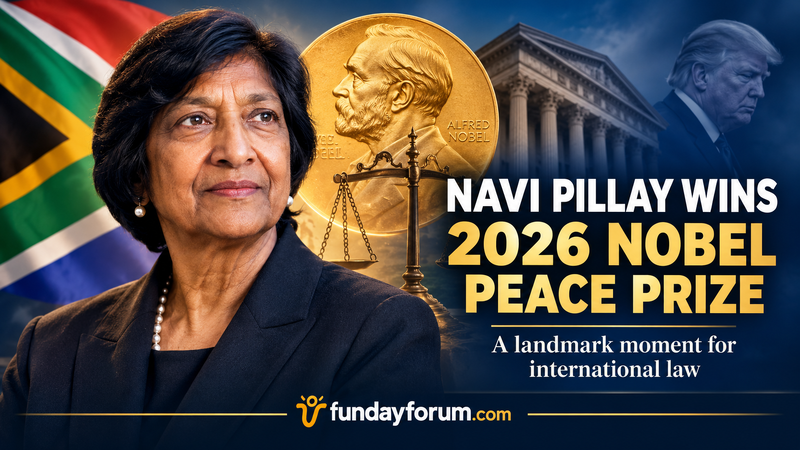
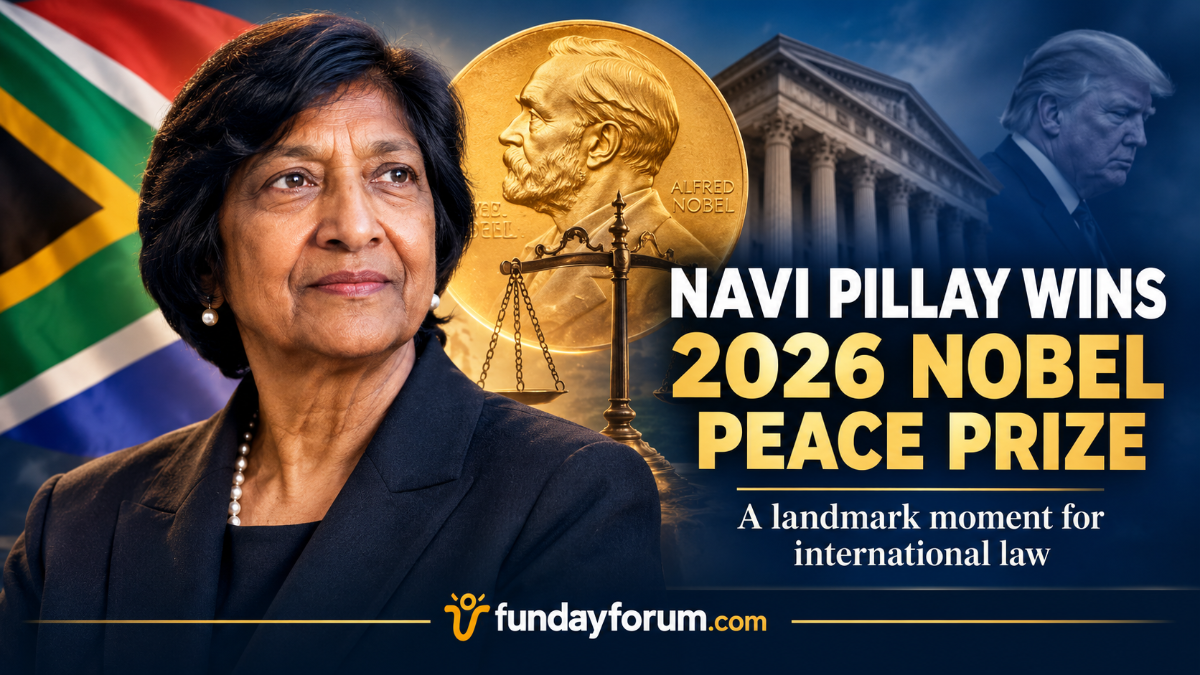

The world is talking about a South African lawyer whose decades-long fight for justice has earned her one of the most prestigious honours on the planet. Navanethem “Navi” Pillay, a respected jurist and former United Nations human rights chief, has won the 2026 Nobel Peace Prize for her efforts to promote peace and international law.
Her victory has also brought renewed attention to US President Donald Trump’s conflict with international justice institutions. But who is Navi Pillay, and why does her achievement matter?
Who Is Navi Pillay?
Born in Durban, South Africa, in 1941, Navi Pillay grew up under apartheid, a system of racial discrimination that shaped her understanding of inequality and injustice.
She became a lawyer in 1967 and established her own legal practice, representing people whose rights were threatened under apartheid. Her early career included defending anti-apartheid activists, including Nelson Mandela and others who challenged the system.
In 1995, she became the first Black woman appointed to South Africa’s High Court, marking a historic milestone in the country's legal system.
Why Did She Win the 2026 Nobel Peace Prize?
The Norwegian Nobel Committee recognised Pillay for strengthening international law and helping establish accountability for serious human rights violations.
Her career includes several important roles:
-
International Criminal Tribunal for Rwanda: She helped advance international criminal law, including the recognition that rape and sexual violence can constitute acts of genocide in certain circumstances.
-
International Criminal Court (ICC): She served as a judge from 2003 to 2008.
-
United Nations High Commissioner for Human Rights: She held this position from 2008 to 2014.
-
UN Commission of Inquiry: She chaired a commission examining the occupied Palestinian territory and Israel from 2021 to 2025.
Her work reflects a central principle: even powerful governments and individuals must be accountable under the law.
How Did Navi Pillay Challenge Trump?

The headline that Pillay “defeated Trump” captures the political drama, but the reality is more nuanced.
Trump has repeatedly criticised international justice institutions, particularly the International Criminal Court. His administration has also taken measures against the court over investigations involving the United States and its allies.
Pillay’s Nobel recognition comes amid this dispute. She chaired the UN commission that concluded Israel committed genocide in Gaza, a finding Israel strongly rejects. Trump and Israeli Prime Minister Benjamin Netanyahu have criticised international legal institutions and rejected the commission’s findings.
The award does not amount to a legal ruling against Trump. Instead, it highlights the global debate over whether international law should apply equally to powerful nations and their leaders.
A Victory for Human Rights and International Justice
For many human rights advocates, Pillay’s achievement represents recognition of the people who work to protect civilians, investigate alleged atrocities and defend the rule of law.
Her career also demonstrates that legal action can create lasting change. From challenging apartheid to serving on international tribunals, she has spent decades working to ensure that serious crimes are investigated and victims are not forgotten.
The Nobel Committee emphasised that peace depends on justice and respect for the rule of law.
What Does Her Nobel Prize Mean for the Future?
Pillay’s award comes at a time when international courts and human rights organisations face political pressure.
It may encourage renewed discussion about the independence of judges, accountability for alleged war crimes and the role of international institutions in resolving conflicts.
However, a Nobel Prize alone cannot end wars or compel governments to comply with court decisions. Its influence will depend on whether countries, institutions and citizens continue supporting the principles it represents.
Final Thoughts
Navi Pillay’s journey from apartheid-era South Africa to the 2026 Nobel Peace Prize is a remarkable story of courage, persistence and commitment to justice.
Her recognition sends a message that international law and human dignity remain important, even when powerful political leaders challenge the institutions responsible for protecting them.
She may not have literally defeated Donald Trump, but her Nobel victory has placed the struggle over international justice firmly in the global spotlight.





















![More information about "[Dark / Light] Fluent Design Theme Edition"](https://fundayforum.com/uploads/monthly_2022_10/1.thumb.png.2ade2c3bae599c8d90ce20980a1e1307.png)























Recommended Comments
There are no comments to display.
Join the conversation
You can post now and register later. If you have an account, sign in now to post with your account.
Note: Your post will require moderator approval before it will be visible.