

.thumb.png.ea12d62fcb43a79b1d7a7a4664107cbc.png)
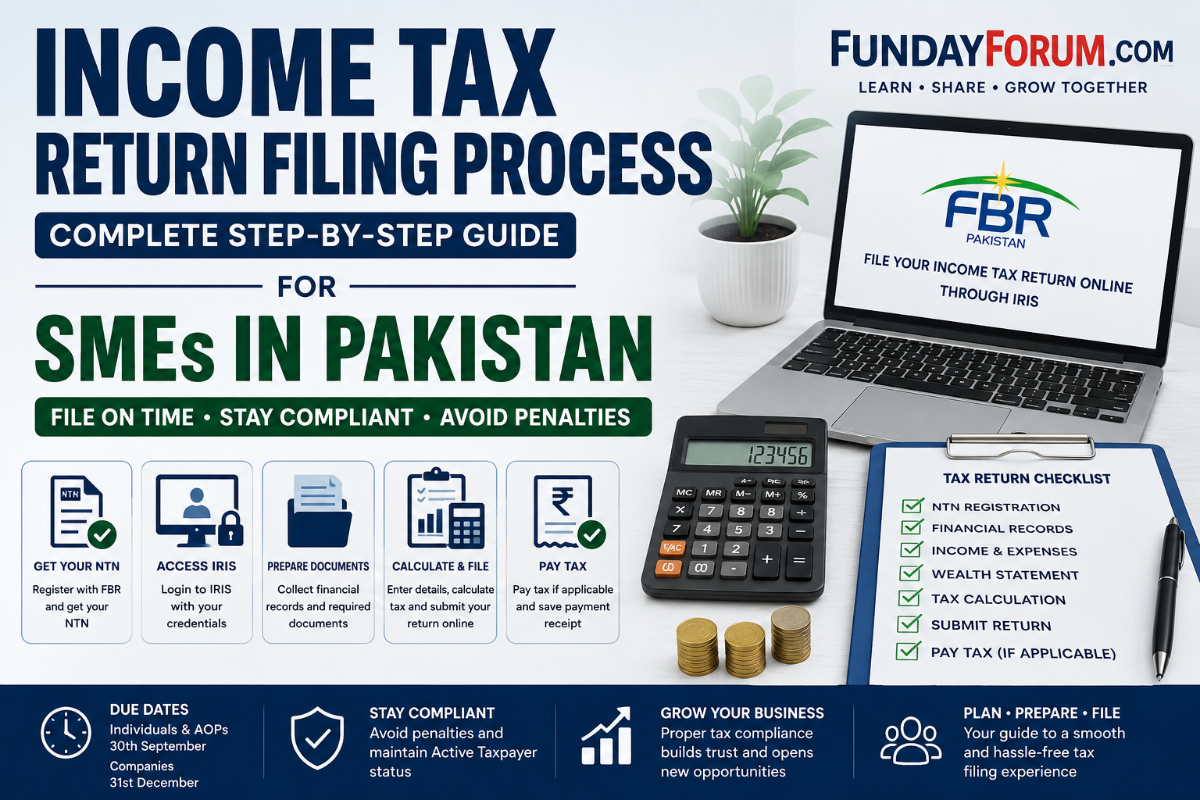
Income Tax Return Filing Process in Pakistan – Complete Step-by-Step Guide for SMEs
Introduction
Filing an Income Tax Return is an important part of running a compliant business in Pakistan. Small and Medium Enterprises (SMEs), traders, manufacturers, service providers, freelancers and other businesses should maintain proper financial records and fulfill their applicable tax filing obligations.
The Federal Board of Revenue (FBR) uses the IRIS online system for income tax registration and online return filing. FBR states that e-enrollment provides the taxpayer with an NTN or registration number and access credentials for IRIS. (Federal Board of Revenue)
This guide explains the income tax return filing process for SMEs in Pakistan step by step, including registration, required documents, preparation of financial information, filing through IRIS, tax payment, record keeping and common mistakes.
1. Understand Your Business Tax Status
Before filing your return, first identify how your business is legally structured.
An SME may operate as:
-
Sole Proprietorship / Individual Business
-
Partnership / Association of Persons (AOP)
-
Private Limited Company
-
Single Member Company
-
Other company structures
The filing requirements and applicable return forms can differ according to the taxpayer's legal status and type of income.
2. Obtain NTN / Register with FBR
The first major step is ensuring that your business or taxpayer is properly registered with FBR.
For individuals, the CNIC is used as the NTN/registration number after e-enrollment. For AOPs and companies, FBR issues a separate registration/NTN number. (Federal Board of Revenue)
Basic information generally required
For an individual/business owner, FBR registration may require:
-
CNIC
-
Mobile number registered against CNIC
-
Email address
-
Bank account information
-
Business address
-
Evidence of ownership or tenancy of business premises
-
Recent paid utility bill of business premises, where applicable
FBR's current registration guidance specifically lists bank-account evidence, business premises evidence and a recent utility bill among the documents required for individual online registration. (Federal Board of Revenue)
For AOP / Partnership
Additional documents can include:
-
Partnership deed
-
Registration certificate from Registrar of Firms, where applicable
-
CNICs of partners
-
AOP authorization letter
-
AOP bank account information
-
Business premises information
For a Company
Documents can include:
-
Certificate of incorporation
-
CNICs of directors
-
Company authorization letter
-
Company email
-
Company bank account information
-
Business premises information
-
Recent utility bill
3. Create or Access Your IRIS Account
Income tax returns are filed electronically through the FBR IRIS system.
After registration, taxpayers can log into IRIS using their NTN/registration number and password. If an NTN already exists but IRIS credentials have not been obtained, FBR provides an "E-enrollment for Registered Person" facility. (Federal Board of Revenue)
Important
Keep your:
-
IRIS username/NTN
-
Password
-
Registered mobile number
-
Registered email address
secure.
Do not share your IRIS password or OTP with unauthorized persons.
4. Collect All Business Documents Before Filing
Do not start preparing the return without first collecting your financial records.
For an SME, prepare the following information where applicable:
Sales and Revenue
-
Sales invoices
-
Cash sales
-
Credit sales
-
Online sales
-
Service income
-
Commission income
-
Other business income
Business Expenses
Collect records for:
-
Purchase of goods/raw materials
-
Salaries and wages
-
Rent
-
Electricity
-
Gas
-
Telephone and internet
-
Transportation
-
Freight
-
Repairs and maintenance
-
Marketing and advertising
-
Professional fees
-
Bank charges
-
Office expenses
-
Other allowable business expenses
Banking Records
Keep:
-
Business bank statements
-
Deposit records
-
Payment records
-
Cheque information
-
Online transaction records
Assets
Prepare details of business assets such as:
-
Machinery
-
Furniture
-
Computers
-
Vehicles
-
Equipment
-
Property
-
Other fixed assets
Liabilities
Record applicable:
-
Business loans
-
Bank financing
-
Supplier payables
-
Other outstanding liabilities
5. Prepare Your Financial Information
Before entering information into IRIS, prepare a simple financial summary.
For example:
Total Sales / Revenue
Minus:
Allowable Business Expenses
Equals:
Business Profit / Loss
The taxpayer should ensure that the figures entered into the return are supported by proper records.
For companies and larger SMEs, professionally prepared financial statements may be necessary depending on the entity, applicable law and filing requirements.
6. Review Your Bank Transactions
Bank statements should be reviewed before filing.
Check:
-
Total deposits
-
Business receipts
-
Personal transactions
-
Loan proceeds
-
Transfers
-
Supplier payments
-
Major purchases
-
Tax payments
-
Other significant transactions
Do not automatically treat every bank deposit as business sales. Each significant transaction should be properly identified and accounted for according to its actual nature.
7. Prepare Income Tax Return
Log into IRIS and select the appropriate income tax return for the relevant tax year.
FBR's IRIS guidance states that taxpayers complete the Return of Income and, where applicable, the Wealth Statement / statement of assets and liabilities. (FBR Urdu)
The information entered may include:
-
Business income
-
Salary income, where applicable
-
Property income
-
Other income
-
Business expenses
-
Tax deductions
-
Tax credits
-
Tax already deducted/paid
-
Assets
-
Liabilities
-
Other required information
The exact fields depend on the taxpayer's category and the applicable tax year's return form.
8. Complete the Wealth Statement Where Applicable
For individuals who are required to submit a Wealth Statement, this is an important part of the filing process.
The statement may include:
Assets
-
Cash
-
Bank balances
-
Property
-
Vehicles
-
Investments
-
Business assets
-
Other personal assets
Liabilities
-
Loans
-
Borrowings
-
Other liabilities
Personal / Household Information
Relevant expenses and other information may also be required.
Wealth Reconciliation
One of the most important checks is reconciliation between the current and previous year's wealth.
FBR explains that the Wealth Statement must reconcile the increase or decrease in wealth with income and expenses; failure to reconcile can prevent successful submission. (FBR Urdu)
Do not simply enter estimated figures to force reconciliation. Investigate the difference and correct the underlying information.
9. Enter Tax Already Deducted or Paid
An SME may have already paid or suffered tax during the year.
Depending on the circumstances, records may include:
-
Withholding tax
-
Advance tax
-
Tax deducted by customers
-
Tax collected by banks
-
Tax deducted on certain transactions
-
Tax paid through challan/PSID
-
Other applicable tax payments
Keep evidence of these amounts and enter them correctly in the applicable section of the return.
10. Calculate Tax Liability
After entering income, expenses and applicable adjustments, IRIS will calculate the relevant tax position based on the information entered and applicable rules.
The result may show:
-
Tax payable
-
Tax already paid
-
Refund position
-
Zero tax liability
Important
Do not assume that "no tax payable" means that no return is required.
A taxpayer can have filing obligations even when the final tax payable is zero, depending on the circumstances.
11. Review the Complete Return
Before clicking submit, carefully review the return.
Check:
-
CNIC/NTN
-
Tax year
-
Business name
-
Business activity
-
Sales
-
Expenses
-
Profit/loss
-
Bank information
-
Assets
-
Liabilities
-
Withholding tax
-
Tax payments
-
Tax credits
-
Wealth statement
-
Reconciliation
A small typing error can create problems later.
12. Submit the Return Through IRIS
Once all required information has been completed and verified, submit the return electronically through IRIS.
FBR states that successful submission is confirmed when the relevant Return of Income and Wealth Statement tasks move from the Draft folder to Completed Task. (FBR Urdu)
Always save evidence of filing
Keep:
-
Filed return
-
Acknowledgement
-
Submission confirmation
-
Tax payment receipt
-
PSID/CPR where applicable
-
Supporting financial records
13. Pay Tax If Tax Is Payable
If the return shows tax payable, make the applicable payment through the prescribed FBR payment process.
Keep the payment evidence with your tax records.
The taxpayer should verify that the payment has been correctly reflected in the relevant tax account/record.
14. Check Your Active Taxpayer Status
After filing, taxpayers should check their status on the applicable Active Taxpayer List (ATL) where relevant.
Being an active taxpayer can be important for businesses because tax rates and withholding requirements may differ depending on taxpayer status under applicable law.
15. Keep Proper Business Records
SMEs should not consider tax filing complete simply because the return has been submitted.
Maintain organized records of:
-
Sales invoices
-
Purchase invoices
-
Expense receipts
-
Bank statements
-
Payroll records
-
Tax deductions
-
Tax payment receipts
-
Assets
-
Loans
-
Agreements
-
Filed tax returns
-
Wealth statements
-
Supporting documents
Proper record keeping makes future returns, audits and financial planning much easier.
Important Income Tax Filing Deadlines
FBR's current published due dates state:
| Taxpayer | General Due Date |
|---|---|
| Individual | On or before 30 September |
| AOP | On or before 30 September |
| Company | On or before 31 December |
| Company with special tax year | On or before 30 September |
These are the general dates published by FBR; taxpayers should always check the applicable tax year's official notification for any changes or extension. (Federal Board of Revenue)
What Happens If You File Late?
Late filing can have consequences under applicable tax law, including penalties and possible changes in taxpayer status.
FBR has also stated that failure to file by the due date can result in late-filer status and penalties under the law. (Federal Board of Revenue)
If a return is filed after the deadline, FBR provides a process for filing the return after the due date. (Federal Board of Revenue)
Best practice: Do not wait until the final days. Start preparing your accounts and documents well before the deadline.
Common Mistakes SMEs Should Avoid
1. Mixing Personal and Business Transactions
Using one bank account for everything can make financial reconciliation difficult.
2. Not Keeping Sales Records
Every business should maintain proper evidence of its sales and revenue.
3. Claiming Unsupported Expenses
Business expenses should be properly documented and should meet the applicable requirements.
4. Ignoring Bank Statements
Bank transactions can be important supporting evidence for tax records.
5. Incorrect Wealth Statement
An unreconciled Wealth Statement can prevent successful filing.
6. Entering Random Figures
Never enter figures simply to complete a form. Financial information should be based on actual records.
7. Filing Without Checking Withholding Tax
Review applicable tax deductions and available records before submitting.
8. Waiting Until the Deadline
Last-minute filing increases the risk of errors and technical problems.
9. Sharing IRIS Credentials
Never give your password or verification codes to unauthorized people.
10. Not Saving the Filed Return
Always keep a copy of the final return and acknowledgement.
SME Tax Filing Checklist
Before submitting your return, use this checklist:
☐ CNIC / NTN available
☐ IRIS account working
☐ Business information updated
☐ Sales/revenue calculated
☐ Purchase records prepared
☐ Business expenses calculated
☐ Bank statements reviewed
☐ Assets prepared
☐ Liabilities prepared
☐ Withholding tax information checked
☐ Tax payments checked
☐ Income Tax Return completed
☐ Wealth Statement completed, where applicable
☐ Wealth reconciliation completed
☐ All information reviewed
☐ Tax payable checked
☐ Tax paid, where applicable
☐ Return successfully submitted
☐ Acknowledgement saved
☐ Supporting documents safely stored
Why Income Tax Filing Is Important for SMEs
Proper tax compliance can help an SME:
-
Maintain a better financial record
-
Demonstrate tax compliance
-
Build credibility with banks and financial institutions
-
Support business financing applications
-
Maintain an organized business profile
-
Avoid unnecessary penalties
-
Manage business finances more effectively
-
Prepare for future expansion
-
Support documentation for business transactions
-
Maintain a transparent financial history
When Should an SME Hire a Tax Professional?
Professional assistance can be useful when an SME has:
-
Multiple sources of income
-
Large business turnover
-
Complex expenses
-
Significant assets
-
Business loans
-
Import/export transactions
-
Multiple business partners
-
Employees and payroll
-
Withholding tax obligations
-
Tax credits or complex adjustments
-
Previous unfiled returns
-
Tax notices from FBR
-
Audit-related matters
A tax professional can also review the business records before filing and help identify errors or missing information.
Final Advice for SME Owners
Income tax filing should not be treated as a once-a-year form-filling exercise. SMEs should maintain their accounts and supporting documents throughout the year.
The best approach is:
Maintain Records → Calculate Income → Record Expenses → Reconcile Banks → Prepare Assets & Liabilities → Review Tax → File Through IRIS → Pay Applicable Tax → Save Evidence
FBR provides official guidance for registration and income tax return filing, and taxpayers should use the applicable rules and forms for their particular tax year and business structure. (Federal Board of Revenue)
Disclaimer: This article is intended for general educational guidance for SMEs in Pakistan. Tax treatment can vary according to business structure, income type, tax year and applicable law. For complex cases, taxpayers should consult a qualified tax practitioner and verify the latest requirements directly with FBR.

















![More information about "[Dark / Light] Fluent Design Theme Edition"](https://fundayforum.com/uploads/monthly_2022_10/1.thumb.png.2ade2c3bae599c8d90ce20980a1e1307.png)























Recommended Comments
There are no comments to display.
Join the conversation
You can post now and register later. If you have an account, sign in now to post with your account.
Note: Your post will require moderator approval before it will be visible.