


🟡 King Mansa Musa I – Complete History (Childhood to Death)
🟢 Introduction
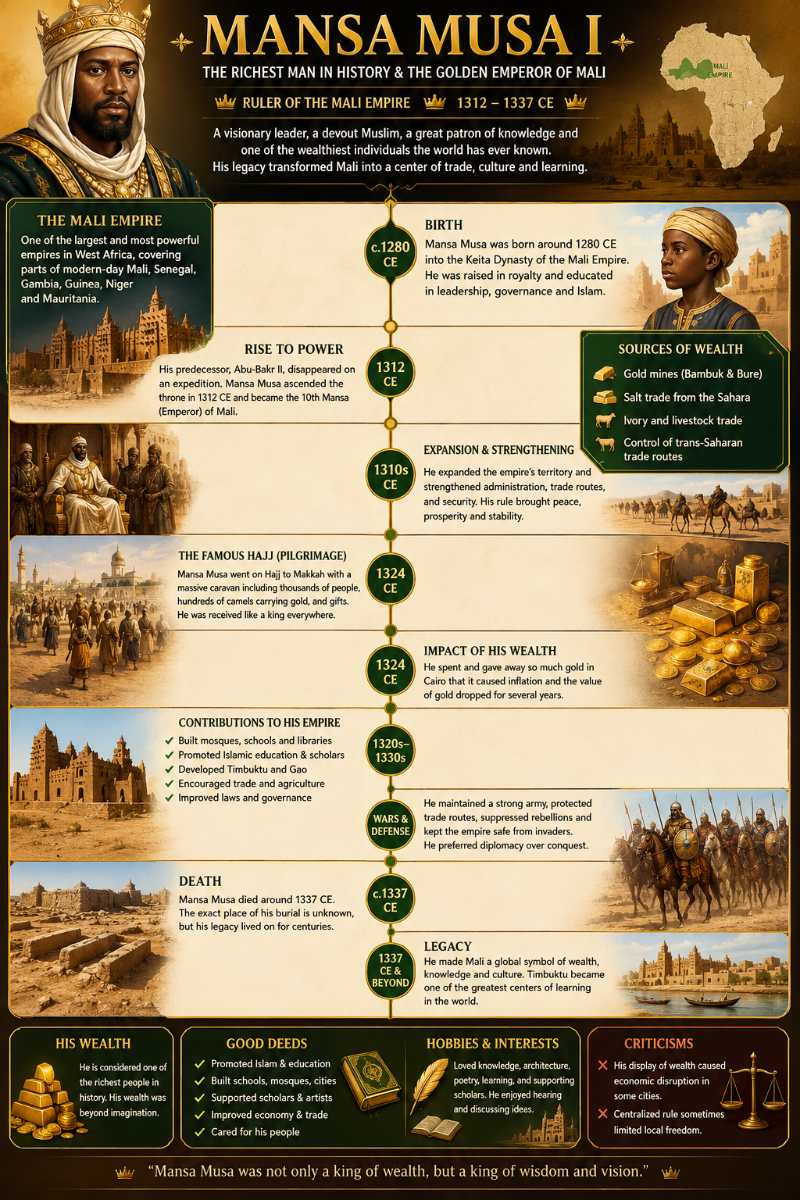
King Mansa Musa I was the tenth emperor (Mansa) of the Mali Empire in West Africa. He is remembered as one of the richest individuals in recorded history and a powerful ruler who expanded his empire, promoted Islam, and transformed Mali into a global center of trade and learning.
🟤 Early Life & Origin
King Mansa Musa was born around the year 1280 CE into the ruling Keita dynasty of the Mali Empire.
- Father: Not fully documented in historical records (believed to be a minor royal figure in the Keita dynasty)
- Grandfather: Linked to the founding royal lineage of Sundiata Keita’s empire
- Dynasty: Keita Dynasty
- Religion: Islam
⚠️ Historical Note:
Exact details of his childhood, siblings, and early education are not fully preserved in written records, but he was trained in leadership, administration, and Islamic teachings.
👑 Rise to Power
King Mansa Musa came to power in 1312 CE when his predecessor, Abu-Bakr II, is believed to have gone on an expedition across the Atlantic and never returned.
He became emperor and took the title “Mansa” (King of Kings).”
🏛️ The Mali Empire Under His Rule
During his reign, the Mali Empire became one of the largest and richest empires in the world.
🌍 Territories included:
- Present-day Mali
- Senegal
- Gambia
- Guinea
- Niger
- Mauritania
📈 Government Strengthening:
- Strengthened Islamic administration
- Appointed governors in provinces
- Improved law and taxation system
- Promoted trade routes across Sahara Desert
💰 Wealth of Mansa Musa
Mansa Musa is often described as the richest person in history.
Sources of Wealth:
- Gold mines of Bambuk and Bure
- Salt trade from Sahara
- Ivory and agricultural trade
- Control of trans-Saharan trade routes
💎 Impact of Wealth:
His wealth was so enormous that it influenced economies across North Africa and the Middle East.
🕋 Famous Hajj Journey (1324)
His pilgrimage to Makkah is one of the most legendary journeys in history.
Caravan included:
- Thousands of soldiers
- Servants and scholars
- Camels carrying gold
Key Event:
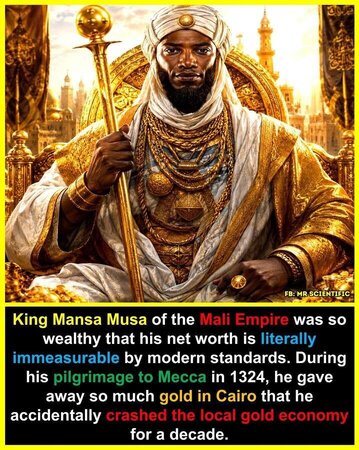
- He distributed so much gold in Cairo that it caused inflation and decreased gold value temporarily.
Importance:
- Spread Mali’s fame globally
- Strengthened diplomatic ties with Islamic world
- Brought scholars and architects back to Mali
🏗️ Contributions & Good Deeds
📚 Education & Islam:
- Built Islamic schools (madrasas)
- Supported scholars in Timbuktu
- Promoted Quranic education
🏙️ Architecture:
- Built mosques across Mali
- Expanded Timbuktu into a major intellectual center
- Encouraged urban development
🌍 Economic Development:
- Strengthened trade routes
- Encouraged foreign traders
- Stabilized empire economy
⚔️ Wars & Military Expansion
Mansa Musa did not rely heavily on conquest like many emperors, but:
- Maintained strong defensive armies
- Secured trade routes from bandits
- Stabilized rebellious regions
- Expanded influence peacefully through diplomacy
🎭 Personality, Hobbies & Lifestyle
While historical records are limited:
Known traits:
- Deeply religious (Islamic scholar-minded ruler)
- Interested in architecture and learning
- Focused on governance and justice
- Supported poetry, scholarship, and trade
⚖️ Negative Aspects / Criticism
There is no major historical record of personal cruelty, but historians note:
- His wealth display caused economic disruption in Cairo
- Strong centralized rule limited local autonomy in some regions
- Empire depended heavily on trade routes (vulnerable system)
🏛️ Legacy & Death
- Died around 1337 CE
- Buried in Mali (exact burial site unknown)
Legacy:
- Mali became a golden center of Islamic culture
- Timbuktu became world-famous for knowledge
- His Hajj remains one of the most studied events in African history
- Symbol of African wealth, power, and civilization
🌟 Conclusion
Mansa Musa I remains a legendary figure whose wealth, leadership, and vision transformed West Africa. From his rise as emperor to his historic pilgrimage and lasting cultural impact, he continues to be remembered as one of the most influential rulers in world history.



















![More information about "[Dark / Light] Fluent Design Theme Edition"](https://fundayforum.com/uploads/monthly_2022_10/1.thumb.png.2ade2c3bae599c8d90ce20980a1e1307.png)























Recommended Comments
There are no comments to display.
Join the conversation
You can post now and register later. If you have an account, sign in now to post with your account.
Note: Your post will require moderator approval before it will be visible.